Selling a Houston Heights home with a shared driveway starts by separating what people physically do from what the property records establish. Photograph the present layout and condition, obtain the best available survey, review the title commitment and every relevant exception document, collect any written use or maintenance agreement, and complete the seller's disclosure from actual knowledge. A visible path, years of neighborly use, or a line on an old survey does not by itself answer who has access, what land the right covers, who maintains the surface, or what a buyer's title policy will cover. Resolve those questions with the responsible survey, title, and legal professionals before the listing description turns an assumption into a promise.
The objective is not to turn the seller into a surveyor or attorney. It is to give the listing team one reliable property file, identify unresolved questions early, and present the driveway accurately enough that a buyer can complete contract-specific review without the seller improvising under deadline.
One Driveway Can Create Four Different Questions
“Shared driveway” is a useful conversational phrase, but it is not a complete property description. It might describe a paved area that crosses a boundary, separate strips that meet near the street, a recorded access easement, a private maintenance arrangement, permissive neighbor use, or a layout that only appears shared from the curb.
Build the pre-listing file in four layers:
Evidence layer | What to collect | What it can help establish | What it cannot establish alone |
|---|---|---|---|
Physical condition | Current photographs, measurements, gates, paving, drainage, parking pattern, visible damage, and obstructions | How the driveway looks and functions today | Legal boundaries, access rights, or title coverage |
Survey and title | Current or prior survey, legal description, title commitment, exception documents, plat, and relevant recorded instruments | How the property, improvements, and recorded matters are described | Every historic use pattern or the condition of the surface |
Use and maintenance | Written agreements, invoices, repair history, communications, access devices, and a factual account of current practice | How the owners have handled access and expense | Whether an informal practice created, changed, or extinguished a legal right |
Transaction and disclosure | Seller's Disclosure Notice, listing language, buyer questions, contract, title work, and professional guidance | What was represented, delivered, investigated, or referred | A substitute for a survey, title examination, inspection, or legal opinion |
Keep the layers separate until the appropriate professional connects them. A survey does not create a right of access. A recorded document does not prove that the present driveway is usable in the way a buyer expects. A title policy does not repair pavement or guarantee neighbor cooperation. Longstanding use should not be advertised as a legal conclusion.
Document the Present Layout Before You Describe It
Start with the exact address and legal property description. Then make a neutral current-condition record before repairs, staging, moving vehicles, or changing a gate alters what buyers will see.
Useful photographs and notes can show:
- where the driveway begins at the street;
- its path beside the house and toward any rear parking or garage;
- the relationship between paving, fences, gates, structures, and apparent property lines;
- how vehicles enter, pass, turn, park, and exit;
- visible cracks, settlement, drainage patterns, patched areas, or obstructions;
- utility equipment, meters, trees, or other features that affect movement; and
- any separate walkway or access serving an accessory structure.
Describe observed facts, not conclusions. “The concrete drive runs along the east side of the house and connects to rear parking” is an observation. “The neighbor has a permanent right to use it” is a title or legal conclusion unless the controlling records and qualified review support it.
If the pavement, drainage, gate, retaining condition, or adjacent improvement raises a physical concern, route that issue to the appropriate inspector, contractor, engineer, or other qualified specialist. Keep that condition review distinct from the boundary and access review.
Read the Survey Beside the Title Commitment
Title and survey evidence play different roles under Texas's current resale form. Paragraph 6 of TREC Form 20-19, One to Four Family Residential Contract (Resale), calls for a survey prepared by a registered professional land surveyor acceptable to the title company and buyer's lender. Depending on the box selected and the negotiated blanks, the transaction may use an existing survey with the applicable T-47 affidavit or T-47.1 declaration, a buyer-obtained survey, or a seller-provided new survey. An existing survey or accompanying declaration may not be accepted.
That contract is a transaction form, not a universal calendar. The selected provisions and completed blanks control the particular deal. A seller preparing before launch should gather the existing survey and related records without promising that a future buyer, lender, or title company will accept them.
For the pre-listing review, compare:
- the deed and legal description;
- the survey's boundary lines and depicted improvements;
- the driveway's observed location;
- any easement, encroachment, overlap, or access notation;
- the title commitment's Schedule B exceptions;
- the full documents supporting driveway-related exceptions; and
- any mismatch between the paper record and current site.
Do not rely on a label without reading the underlying instrument. The width, location, benefited land, burdened land, purpose, conditions, maintenance language, and amendment history may matter. Interpretation belongs to the title company and, when legal advice is needed, a qualified Texas attorney. A registered professional land surveyor can address survey evidence and the relationship between depicted improvements and boundaries.
Use County Records as a Starting Point, Not a Clearance Letter
The Harris County Clerk Real Property Department records documents pertaining to real property in Harris County and links to its public real-property search portal. That search can help locate deeds, plats, restrictions, easements, releases, amendments, and other recorded instruments tied to names or property records.
An online search is not a complete title examination. Indexing can depend on names, dates, document types, and how an instrument was recorded. A survey may appear only as an exhibit to another document, and the county search portal is not a legal opinion about the property. An empty result does not prove that no easement, restriction, or access issue exists.
Save the document number, recording date, parties, legal description, and every referenced exhibit for potentially relevant records. Give the file to the selected title company or attorney rather than drawing a conclusion from a search result or a clipped first page.
Separate Access From Maintenance
Even when access is supported by the records, a seller may still need to explain how the driveway operates in ordinary life. Buyers commonly want to understand gates, parking, deliveries, trash service, repair coordination, drainage work, and the handling of damage or obstruction.
Collect factual evidence such as:
- a written driveway, access, or maintenance agreement;
- invoices for paving, drainage, gate, or repair work;
- dates and descriptions of known repairs;
- records of shared expense, if any;
- current gate, key, or remote-control arrangements;
- written communications that explain an existing operational practice; and
- warranties or contractor information that can be transferred.
Do not convert an informal history into a promise that it will continue. “The owners split one repair invoice in 2024” is evidence of that event. It does not, by itself, define a permanent allocation for future work. Likewise, a recorded access right does not necessarily state who must pay for every surface repair or how vehicles may be parked.
If the records and current practice do not align, identify the question before contacting a neighbor for a new signature or agreement. The title company or attorney can explain what documentation may be appropriate and who must participate. A rushed side agreement can create a new problem instead of resolving the old one.
Complete the Seller's Disclosure From Actual Knowledge
The current TREC Seller's Disclosure Notice, Form 55-1, is effective May 28, 2026. It is a disclosure of the seller's knowledge and expressly says it is not a substitute for a purchaser's inspections or warranties.
The form asks about known defects or malfunctions in driveways, known unplatted easements, items needing repair, and a private road on or adjoining the property for which the seller is financially responsible for maintenance. Those prompts are not interchangeable, and they do not replace the title and survey review. Complete the actual form that applies to the transaction, explain known conditions accurately, and attach additional detail when the form or professional guidance calls for it.
A strong disclosure file may include:
- the seller's factual explanation of current use;
- known driveway defects or repairs;
- known access or boundary questions;
- the survey and title documents already available;
- written agreements or maintenance records; and
- unresolved matters clearly referred for professional review.
Avoid both extremes: do not minimize a known issue, and do not invent a legal conclusion to fill an information gap. If the seller does not know what an instrument means, the accurate next step is review—not a confident guess in the listing remarks.
Understand What Title Insurance Does—and Does Not Do
The Texas Department of Insurance title insurance FAQ explains that the title commitment comes before closing and lists potential issues, exclusions, or exceptions. The title policy is issued after closing and provides coverage subject to its terms. A commitment does not guarantee that no current or future issue exists, and exceptions are matters the policy does not cover.
TDI also advises comparing the policy's legal description with the survey. Ordinary title coverage does not necessarily protect against a boundary dispute with a neighbor; additional coverage may be available in some circumstances. Coverage questions belong with a licensed title agent, and document interpretation may require an attorney.
For a seller, the practical lesson is simple: “the buyer will have title insurance” is not a resolution plan. Deliver the available survey early, let the title company issue and explain the commitment, obtain the exception documents, and allow enough time for contract-specific review. If a curative document, new survey, release, amendment, or legal agreement is appropriate, the responsible professionals should identify it.
Check Historic-District and Permit Questions by Property and Scope
Houston Heights is not one uniform historic designation. First determine whether the subject property is in a City of Houston historic district or is a designated landmark, and identify its classification. The City's Plan a Project guidance directs owners to determine designation status before identifying the scope of proposed work.
The City's guidance explains that exterior work on a designated property may require a Certificate of Appropriateness depending on the property's classification and the proposed scope. Its Houston Heights design guidance discusses driveways and parking areas as site features. Other permits or private restrictions may also apply.
Do not state that a shared driveway automatically requires preservation approval. Instead, verify the exact property, designation, classification, proposed work, and current City guidance. Contact the Houston Office of Preservation and Houston Permitting Center when the planned scope makes that review relevant. Preserve any prior COA, permit, plan, inspection, or closeout record tied to driveway, gate, parking, addition, or exterior work.
For the larger historic-property file, use our companion guide to documents needed to sell a historic Houston Heights home. This article keeps the narrower ownership question: the driveway's physical condition, documented access, operation, and sale readiness.
Write Listing Copy From Verified Facts
Marketing should describe the benefit the evidence supports—not the benefit everyone hopes exists. Avoid terms such as “deeded,” “permanent,” “exclusive,” “guaranteed,” “maintenance-free,” or “private” unless current documents and professional review support that exact representation.
Safer factual descriptions may identify:
- the observed driveway location and connection to parking;
- whether a gate or rear parking area is present;
- which survey, title, or agreement documents are available for buyer review; and
- which questions remain subject to the buyer's title, survey, inspection, or legal review.
The listing should not litigate the issue in public remarks. It should accurately introduce the property and route supporting documents through the transaction process. Keep the source file behind every material statement so the listing agent can answer a buyer's question without relying on memory.
If you are preparing to sell, request a Houston Heights home valuation. We can evaluate the property, condition, documented driveway arrangement, and launch plan together before those details become a contract-deadline problem.
Use a Pre-Listing Decision Record
Close the review with one page that assigns a status and owner to each question.
Question | Status | Evidence | Responsible follow-up |
|---|---|---|---|
What is physically present? | Verified / unresolved | Photographs, measurements, inspection notes | Seller, agent, inspector, or specialist |
What does the survey depict? | Verified / outdated / unavailable / unresolved | Existing or new survey | Registered professional land surveyor |
What recorded matters affect the driveway? | Verified / under review / unresolved | Commitment and exception documents | Title company and attorney as needed |
How is access used today? | Verified fact / informal practice / unresolved | Seller account, written agreement, operational records | Seller, title company, attorney as needed |
How has maintenance been handled? | Verified / partial / unresolved | Agreements, invoices, communications | Seller and professional adviser as appropriate |
What must be disclosed or repaired? | Complete / pending / referred | Seller's disclosure, condition records, specialist advice | Seller, agent, inspector, contractor, or attorney |
Does proposed work require City review? | Not applicable / verified / pending | Designation, scope, COA or permit record | Houston Office of Preservation or Permitting Center |
This record does not decide the legal issue. It prevents a physical fact, recorded right, maintenance practice, and marketing statement from being blended into one unsupported answer.
Frequently Asked Questions
Can I sell a Houston Heights home with a shared driveway?
Yes. The driveway does not have to be simple for the property to be marketable, but the seller should organize the physical, survey, title, use, maintenance, and disclosure evidence before launch. Any unresolved access, boundary, or agreement question should be routed to the appropriate survey, title, or legal professional.
Does an old survey prove the driveway access rights?
No. A survey depicts property and improvement information within its scope; it does not create an easement or interpret every recorded right. The current resale contract also recognizes that an existing survey and accompanying affidavit or declaration may not be accepted by the title company or lender. Review the survey with the title commitment and underlying exception documents.
If the county search shows no easement, is the driveway unencumbered?
Not necessarily. The Harris County portal is a research starting point, not a title examination. A relevant instrument can be indexed under different names, incorporated into another document, or missed by a narrow search. An empty online result is not proof that no access right, restriction, or other title matter exists.
Who decides what the driveway document means?
A title company can explain the commitment and coverage it is prepared to issue. A registered professional land surveyor can address survey evidence. Legal interpretation and advice about rights, duties, enforceability, or corrective documents belong to a qualified Texas attorney.
Should the seller ask the neighbor to sign a driveway agreement before listing?
Not without first identifying the actual issue and obtaining appropriate guidance. A new document may affect both properties and existing rights. Let the title company or attorney determine whether clarification is needed, what form is appropriate, and which parties must participate.
Does a Houston Heights shared driveway automatically require a Certificate of Appropriateness?
No universal answer applies. City review depends on the property's designation and classification and the scope of proposed work. Verify the address and project with the Houston Office of Preservation and Houston Permitting Center rather than assuming that ordinary use, maintenance, alteration, or new work follows the same path.
Make the Driveway File Part of the Sale Plan
A shared-driveway question is easier to manage before the property is under contract. Build the physical record, survey-title record, use-maintenance record, and disclosure record separately. Then let the surveyor, title company, attorney, inspector, or City office answer the questions within their responsibility.
That discipline produces better listing language, faster document delivery, and a cleaner path for buyer review. It also protects the seller from turning years of practical neighbor cooperation into a legal or marketing claim the file cannot support.
Request a Houston Heights home valuation to build the property-specific pricing, documentation, and launch plan.
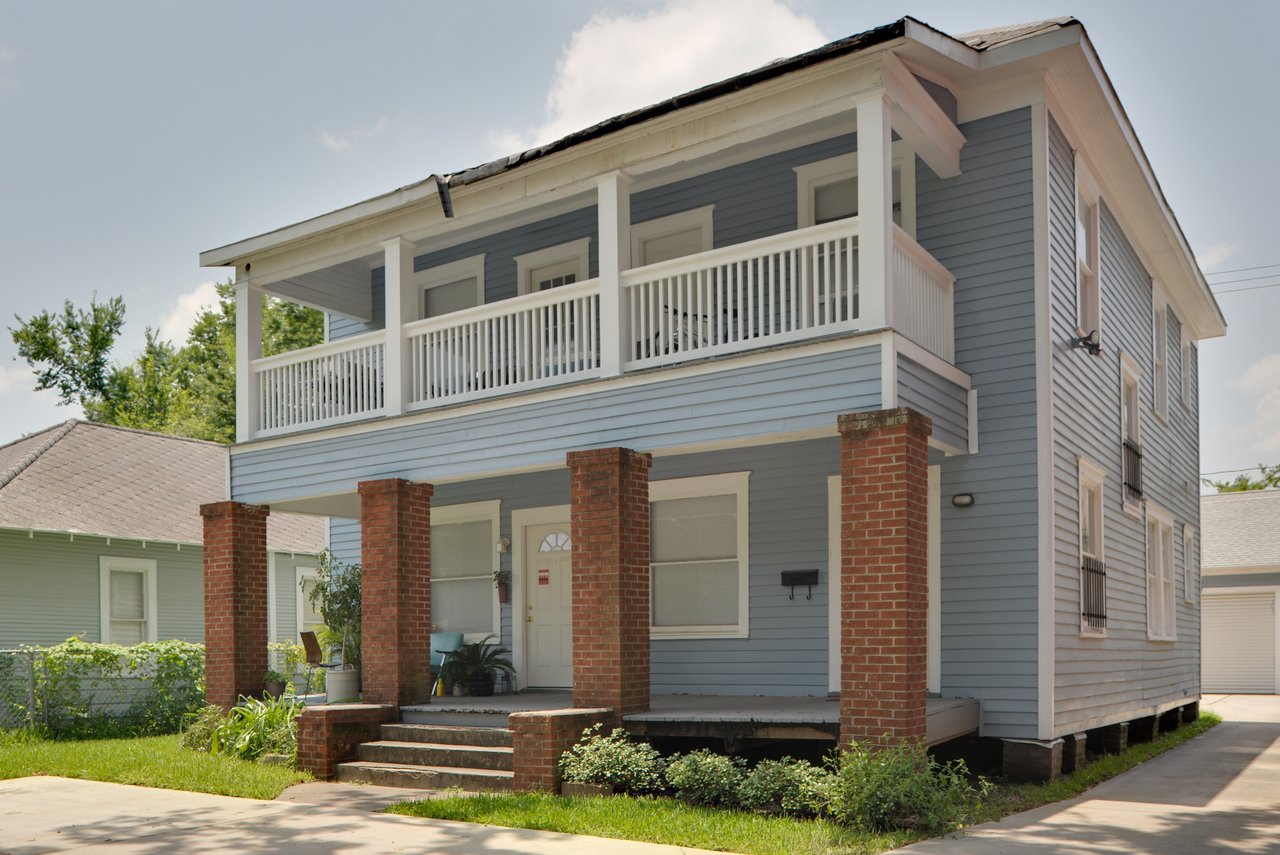
Featured image: “1541 Ashland (HDR)” by Ed Uthman, licensed CC BY 3.0. The photograph shows a verified Houston Heights home and side-driveway context; it does not establish that the pictured property has a shared driveway, is subject to an easement, or is offered for sale.
This article is for general educational purposes. It is not legal, title, surveying, engineering, inspection, insurance, tax, or other professional advice. Property records, contract terms, physical conditions, and professional conclusions are address- and transaction-specific.